Nature, Canada’s most overlooked mental health resource?

Government and Policy
It’s not news that many Canadians face mental health challenges, and that public services are struggling to meet the demand. Yet one of the most overlooked supports has been right under our feet – literally.
Most of us have experienced its effects firsthand. A walk through a forest can quiet a racing mind. Sitting beside a lake can help us feel grounded after a difficult day. Spending time outdoors often leaves us feeling calmer, more focused, and better able to cope with life’s challenges.
More common than you think
In any given year,
- 1 in 5 Canadians experience mental illness
- By age 40, 1 in 2 have — or have had — a mental illness
So why is nature being left out of the conversation as a resource for mental well-being?
Millions of Canadians are experiencing stress, anxiety, burnout, loneliness, and other mental health challenges. At the same time, governments, communities, and healthcare providers are working to improve access to services and better support people’s needs.
The proof is in the science, which shows that nature does more than make you feel good; it plays an important role in our well-being (see how). One analysis estimated the mental health benefits people receive from visiting protected areas are worth trillions of dollars annually, worldwide. When we invest in protecting nature, we’re investing in people’s health as well.
Yet despite these findings, nature is rarely discussed as part of a broader mental health strategy. We asked Dr. Owen Wiseman, a family physician with a longstanding interest in the connection between health, well-being, and the environment around us, to share his perspective.
Q: “Why are scientists and health professionals becoming increasingly interested in the relationship between nature and mental health?”
A: As clinicians, we spend plenty of time asking what is happening inside a person. Nature research is reminding us to also ask what is happening around them. The places people live and spend their days influence health over a lifetime.
What many people have experienced firsthand is increasingly being supported by scientific research. Studies continue to show that nature plays an important role in mental health and well-being.
Benefits of nature
- Nature’s influence begins even before birth. Studies show that green surroundings during pregnancy were associated with healthier fetal growth and as much as a 21% reduction in the odds of low birth weight.
- A nationwide study involving more than 108,000 Swedish adults found that people with greater access to greenery near their homes were less likely to begin using antidepressants.
- Research involving one million people in Denmark found that children raised in the most nature-deficient neighbourhoods had a 55% higher risk of developing certain psychiatric disorders later in life.
More Than Just Green Space
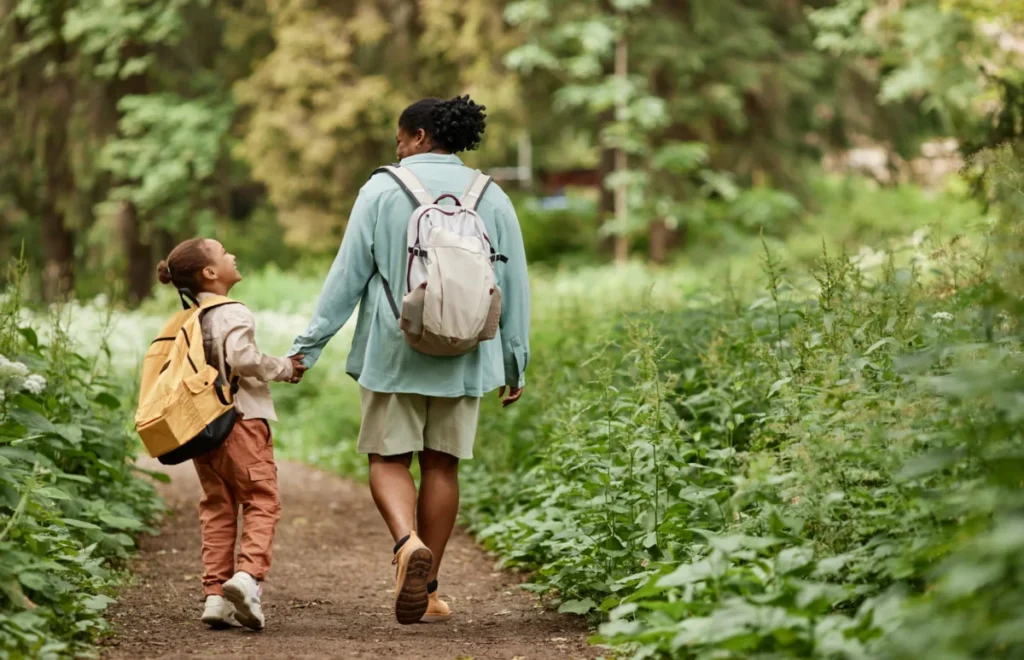
Not all experiences in nature provide the same benefits.
Research suggests that the quality of natural environments matters. Healthy, biodiverse, and ecologically intact landscapes often provide stronger restorative benefits than highly modified or heavily built environments. These benefits can include reduced stress, improved mood, greater relaxation, and increased mental clarity.
The reasons are remarkably simple. Unlike many built environments that constantly compete for our attention, natural environments can engage us in gentler ways that allow the mind to slow down, recover, and enjoy the present moment.
Environmental psychologists Rachel and Stephen Kaplan described this phenomenon as “soft fascination” – a state in which our attention is gently and effortlessly drawn toward the natural world. Unlike the constant demands of emails, notifications, traffic, and deadlines, nature gives our minds an opportunity to rest and recharge.
Protected areas often provide these exact opportunities.
By safeguarding large, relatively intact landscapes, protected areas create places where people can escape noise, light pollution, overcrowding, and the pressures of daily life. They offer space for reflection, solitude, recreation, and connection with something larger than ourselves.
But what is it about protected areas specifically that makes them different from other types of green space?
A neighbourhood park offers incredible access to those around. However, a protected area offers something entirely different. Immersion. There is a profound difference between seeing nature and feeling, even briefly, that you are one with it. The Japanese word for this is yūgen (幽玄). When a landscape is so vast and ancient that words feel… inadequate.
Dr. Owen Wiseman
What If We Thought About Protected Areas Differently?
For decades, protected areas have been recognized for the critical role they play in conserving wildlife, protecting biodiversity, and maintaining ecological integrity. These benefits remain vitally important, but what if we also viewed protected areas as investments in human health?
Protected areas are unique because they generate multiple benefits at once. The same investment that protects habitat for wildlife can also improve opportunities for recreation, strengthen community well-being, support cultural connections, help communities adapt to climate change, and create healthier environments for people. Few public investments deliver such a broad range of environmental, social, and economic benefits through a single action.
Of course, protected areas are not a replacement for hospitals, therapists, medications, or other essential mental health services, but they can help create conditions that support and improve mental and physical health, before intervention might be needed.
In other words, they can be part of a preventative approach to health and well-being.
This idea of prevention is central to how Dr. Owen Wiseman thinks about the relationship between nature and health.
Q: “You often talk about nature as part of a preventative approach to health. What does that mean in practice?”
A: I always say that sick cities make sick people. We will always need hospitals, medications, therapists, and clinicians. But the healthiest society isn’t necessarily the one with the best healthcare system. I’d argue that it is the one that creates fewer reasons for people to need that system in the first place. If we are serious about prevention, we must look beyond the healthcare system itself. Healthier communities begin with healthier places.
As Canada continues to explore ways to support healthier and more resilient communities, nature deserves a place in the conversation.
Protecting Nature Is Investing in People
Mental health is shaped by far more than what happens in clinics, hospitals, and counselling offices.
It is also shaped by the places where we live, work, gather, and recharge.
Protected areas help conserve wildlife, safeguard biodiversity, and strengthen resilience in the face of climate change. They also provide something deeply human: opportunities to slow down, reflect, find perspective, and reconnect with the natural world.
Protecting nature is good for ecosystems, it’s good for wildlife, And it’s good for people, too.
ARTICLE WRITTEN BY:

Other articles you may be interested in:
-
 Government and Policy, Wildlife
Endangered by Predatory Policy, Who Pays the Price?
-
 Government and Policy, Wildlife
Weakening Environmental Safeguards for a Pipeline Puts Orcas at Risk
-
 Government and Policy
Making Nature Decision-Relevant for Government and Business: A Roadmap for Canada
-
-
 Economy, Government and Policy
Speed Kills: Fast-Tracking Development is Risky Business
-
 Economy, Government and Policy
Nation-Building or Breaking?
-
 Economy, Government and Policy
A Force Of Nature?
-
 Government and Policy
How to Spot Misinformation
-
 Economy, Government and Policy
Statement: CPAWS response to “A Force of Nature: Canada’s Strategy to Protect Nature”
-
 Economy, Government and Policy
CPAWS In the News
-
 Government and Policy
Open Letter to Prime Minister Carney
-
 Biodiversity, Conservation, Government and Policy
The Clock is Ticking Yet the Work is Not Done
-
 Government and Policy
Skate to Where the Puck Is Going
-
 Coasts and Ocean, Government and Policy
Defend Our Pacific North Coast
-
 Coasts and Ocean, Government and Policy, Indigenous-led Conservation
CPAWS-BC stands with Coastal First Nations
-
 Economy, Government and Policy
Statement: Federal Audit shows we can protect 30% of nature by 2030, so why is the federal government hitting the brakes?
-
 Economy, Government and Policy
Statement: Nature Benched in Budget 2025
-
 Economy, Government and Policy
Addressing the Natural Infrastructure Policy Gap is Crucial to Nation-Building Success
-
 Government and Policy
Statement: CPAWS reacts to federal government’s first Nation Building Projects
-
 Coasts and Ocean, Government and Policy, Indigenous-led Conservation
Still Fighting for a Seat at the Table
-
 Government and Policy
“Canada Strong” Means Standing Up for Nature
-
 Economy, Government and Policy
Nature on the federal balance sheet: Time to stop funding the problem
-
 Government and Policy
Nation-Building Isn’t Just About Speed. It’s About Vision.
-
 Economy, Government and Policy
Canada’s nature is worth fighting for
-
 Coasts and Ocean, Government and Policy
What Changes in Politics Mean for Nature and Conservation
-
 Government and Policy, Indigenous-led Conservation
COP 16: MAKING PEACE WITH NATURE
-
 Conservation, Government and Policy
Environmental groups welcome the launch of Canada’s strategy to save nature
-
Biodiversity, Government and Policy
17 environmental groups present plan for nature ahead of World Biodiversity Summit
-
-
 Government and Policy, Parks and Protected Areas
Canadians expect more than a C average in conservation
-
Biodiversity, Government and Policy
CPAWS welcomes historic new global agreement to save nature