Endangered by Predatory Policy, Who Pays the Price?
Government and Policy | Wildlife
Rolling back environmental regulations threatens these critical species
Canadians are being told that cutting corners on species protection to speed up development is just the cost of doing business. But what happens when the push to build quickly, threatens wildlife and the natural habitats we depend on – the healthy environment our children and grandchildren should inherit?
That is the question hanging over Canada’s federal government since they announced a proposal in May to bypass important environmental regulations to speed up the development of major industrial projects.
In areas where species are already struggling to survive, the proposed regulatory changes would allow corporations and government to override protections like Canada’s Species at Risk Act. Simply put, it would make it legal to approve industrial development that could lead to extinction.
The consequences are not abstract. This could mean permanent loss of some of Canada’s most important wildlife species and cause rippling effects throughout ecosystems.
If We Don’t Protect Habitat, We Can’t Protect Species
Grizzly bears and orcas are some of the keystone species that play a critical role as predators, balancing prey populations to keep food webs stable and habitats healthy.
When ecosystems decline and become less resilient, Canadians can also feel the effects through declining fisheries, reduced water quality, increased vulnerability to floods and wildfires, and the loss of economic opportunities that depend on nature’s resources.
Southern Resident Killer Whale
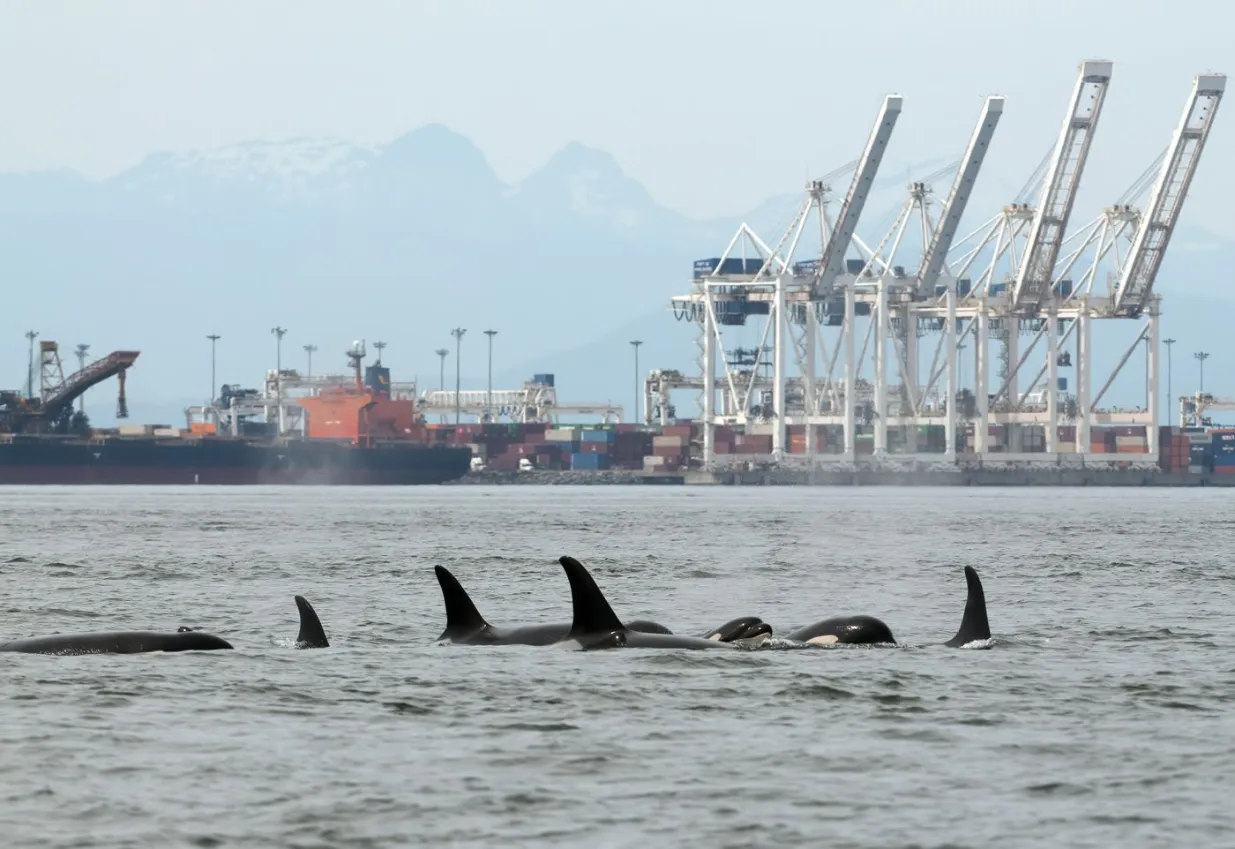
Off the coast of British Columbia, the endangered Southern Resident Killer Whales (SRKW) already face threats from collapsing salmon runs, noise pollution, oil spills and other contaminants. Less than 75 Southern Resident Killer Whales are left and they’re barely hanging on. Tanker traffic could mean we lose them forever.
Now, the port expansion for Roberts Bank Terminal 2 and proposed oil pipeline to BC will intensify dangers they face, turning their home into a shipping highway and increasing oil spill risks.
These whales need space to hunt and recover their population, which is why protecting their waters is crucial. Without the oversight provided by the Species at Risk Act, unchecked development in the SRWK’s primary habitat could have devastating impacts on this species and many others in the area.
As top predators, killer whales help anchor marine food webs and their well-being can be an indicator for overall ecosystem health. Healthy marine ecosystems support commercial and recreational fisheries, coastal jobs, and food security for communities across the Pacific coast.
These whales also carry immense cultural significance for coastal First Nations and support local tourism as one of Canada’s most iconic species. When one SRWK dies, it makes national headlines. These orcas cannot endure the impacts of development without ecological checks and balances.
Interim efforts to preserve the vulnerable SRKW population are a good start but are not effective enough because they are too small in scale and not active year-round. Well-designed and well-managed marine protected areas, like the proposed Southern Strait of Georgia National Marine Conservation Area, could provide comprehensive, large-scale protection of critical habitat and hunting grounds for the SRKW.
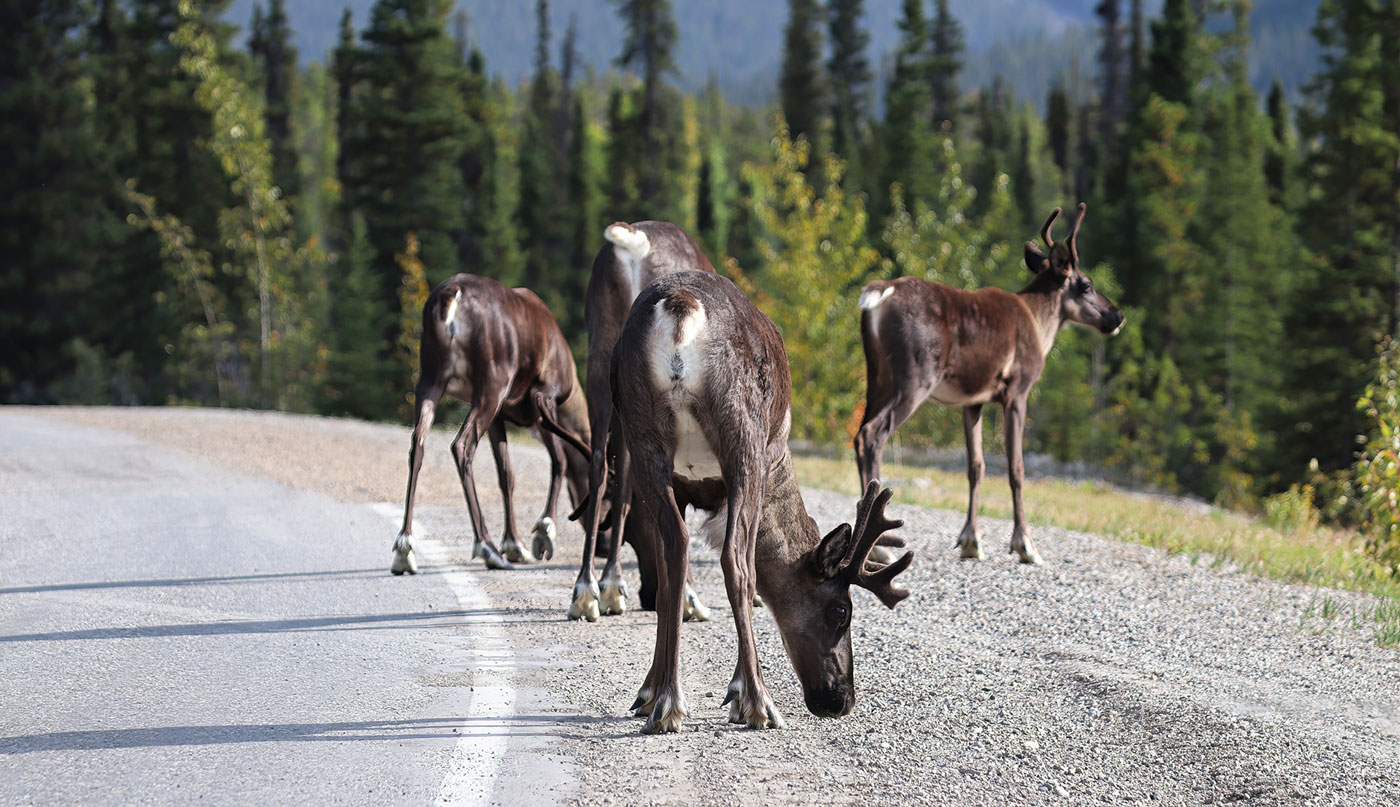
Caribou, Multiple Subspecies
Caribou need large, undisturbed areas to support their herds. Their range spans most of Canada, reaching every province and territory except New Brunswick, Nova Scotia and Prince Edward Island. Because of their extensive distribution, caribou are threatened by a wide range of industrial pressures across the country.
The Bathurst herd has seen a 98% decrease in their population since the 1980s; historically ranging from northern Saskatchewan
to Nunavut, their herd was around 400,000 strong, but has since dropped to under 4,000, as of 2025. While multiple factors have contributed to this decline, research indicates that expanding infrastructure associated with resource development – including roads and mines – has increased habitat disturbance and disrupted caribou movements within the herd’s range.
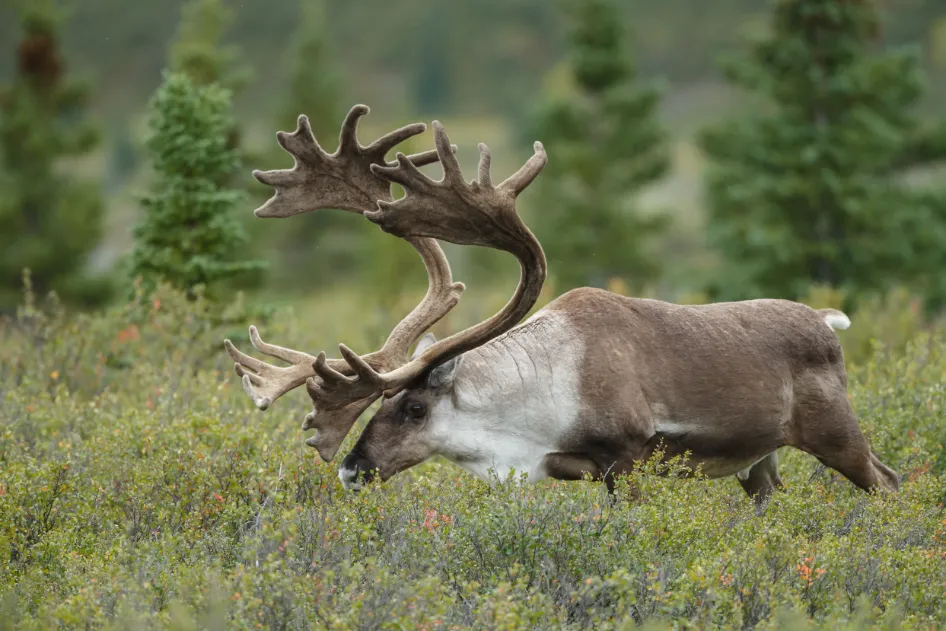
Status updates of the caribou across the country.
As an environmental and cultural keystone species, large northern caribou herds in particular play a critical role in ecosystem function. Herd size and well-being are strong indicators of overall health of the surrounding environment.
The intact forests, wetlands and tundra landscapes that support caribou also help store vast amounts of carbon, filter drinking water, reduce flooding, and provide benefits that help keep communities healthy and resilient.
For millennia, caribou have held deep cultural and spiritual significance for First Nations, Métis and Inuit communities, supporting their identity, well-being, and cultural continuity. As pressures from resource development continue to grow, planning that prioritizes habitat connectivity and the needs of migratory species like caribou will be essential to securing their future across Canada.
Protecting Habitats And Species Amid Economic Growth
The economy can grow without weakening environmental safeguards or threatening important species. Strong environmental protections are not obstacles, they sustain the natural systems Canadians rely on for drinkable water, clean air, food and local economies like fisheries. When we protect wildlife, we’re also protecting the healthy forests, rivers, oceans, and grasslands that shape our quality of life.
If the government is serious about building Canada strong, it should start by taking the sacrifice of wildlife and habitat off the negotiation table.
Other articles you may be interested in:
-
 Government and Policy, Wildlife
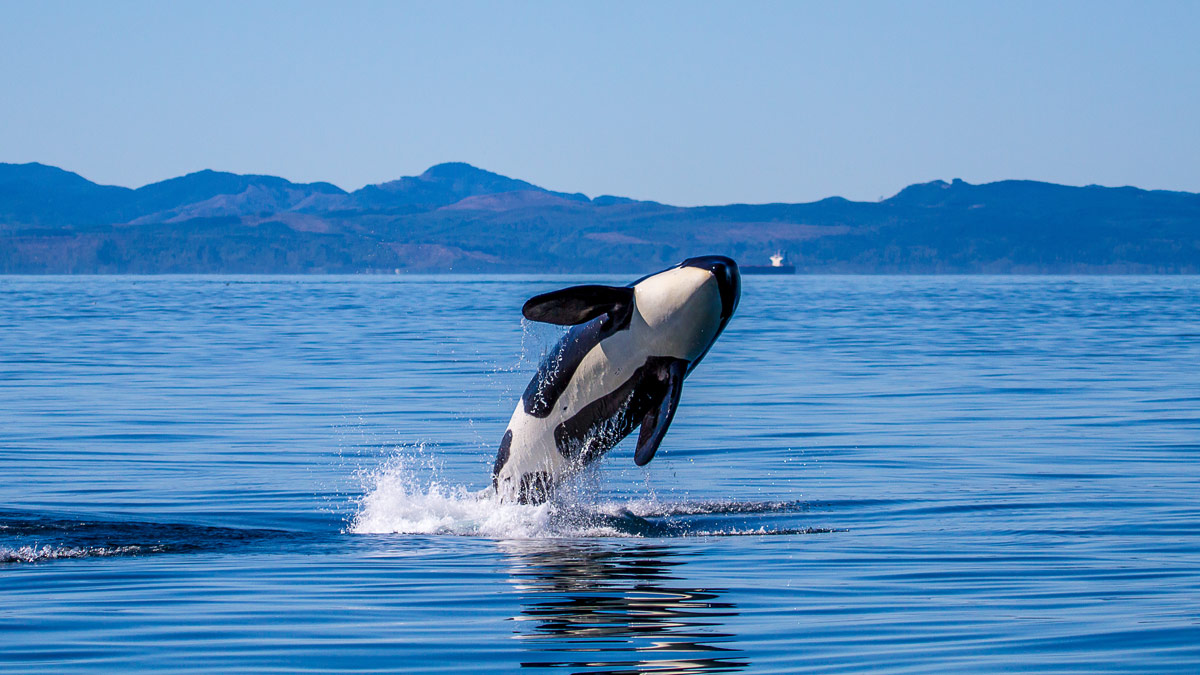
Weakening Environmental Safeguards for a Pipeline Puts Orcas at Risk
the impacts a proposed West Coast oil pipeline and associated increase in oil tanker traffic could have on endangered Southern Resident Killer Whales.
-
 Economy, Government and Policy
Nation-Building or Breaking?
The ink is barely dry on the federal government’s new A Force of Nature strategy, yet their latest proposal for “nation-building” projects appears to be an outright contradiction.
-
 Economy, Government and Policy
Speed Kills: Fast-Tracking Development is Risky Business
Fast food, fast highways, fast project approvals. Everyone is in a rush these days, but faster doesn’t mean better – or safer.


