Weakening Environmental Safeguards for a Pipeline Puts Orcas at Risk

Government and Policy | Wildlife
The Canadian Parks and Wilderness Society (CPAWS) is deeply concerned about the impacts a proposed West Coast oil pipeline and associated increase in oil tanker traffic could have on endangered Southern Resident Killer Whales and the coastal habitats essential for species like salmon and herring, which support killer whales and British Columbians alike.
The proposal, submitted to the Major Projects Office on July 2nd, comes just weeks after the federal government unveiled plans to walk back long-standing environmental protections that provide a critical safeguard for species at risk.
The pipeline proposal is exactly why those safeguards exist.
CPAWS is calling on the federal government to maintain the integrity of the Species at Risk Act (SARA) and rethink its proposal to allow major projects to destroy critical habitat, pushing species like the Southern Resident Killer Whales and potentially Chinook salmon¹ into extinction.
For decades, environmental laws have required governments to carefully examine whether major industrial projects would harm endangered wildlife, destroy critical habitat, or create unacceptable risks for communities. The federal government’s recent proposal would make it easier for political decision-makers to override those protections in the name of speed and development.
“The government says these changes are needed to build major projects faster” said Sandra Schwartz, National Executive Director. “But this pipeline is a perfect example of why environmental safeguards matter. When a project could increase threats to an endangered species, raise the risk of catastrophic oil spills, and impact the coastline, estuaries and watersheds that support local communities and economies, Canadians deserve rigorous review, not fewer checks and balances.”
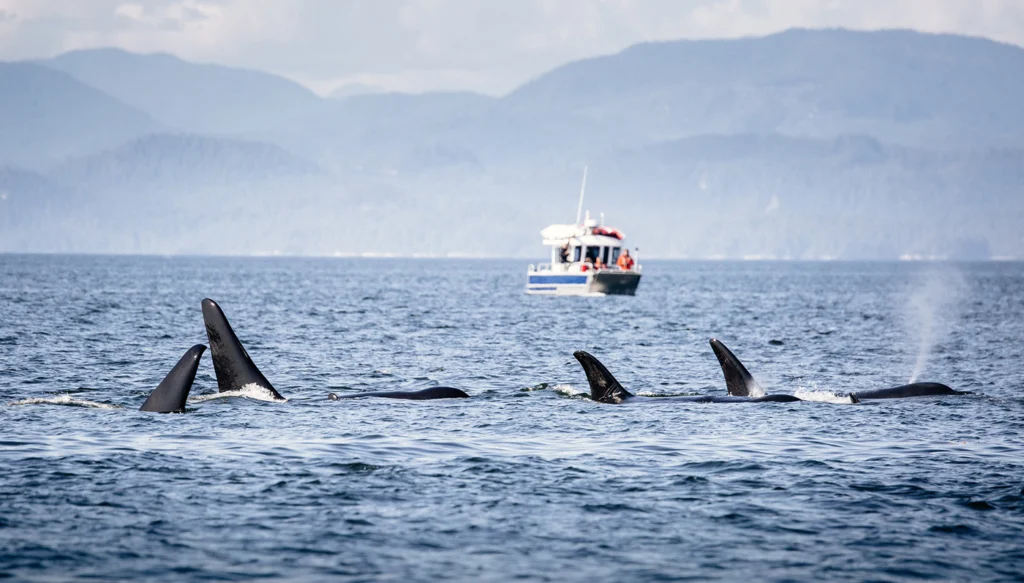
The Southern Resident Killer Whale is already on the brink of extinction. Decades of scientific evidence, including federal environmental assessments, show that increased tanker traffic creates underwater noise that disrupts the whale’s ability to hunt, communicate and navigate. The whales also depend on Chinook salmon and healthy coastal ecosystems that are already under significant pressure.
Yet under the federal government’s proposed reforms, projects like this could face fewer environmental hurdles, shorter review timelines, and greater political discretion to proceed even when critical habitat is at risk.
“Canadians are being asked to trust that weakening environmental laws will lead to better outcomes,” said Schwartz. “This project shows why that is a dangerous gamble. The solution to slow project approvals is not to remove the safeguards that protect wildlife, fisheries, and communities. It’s to make the process more efficient while keeping the science, transparency, and accountability that Canadians expect.”
The risks extend beyond endangered species. Increased tanker traffic also raises the possibility of a major oil spill along British Columbia’s coast.
Nation-Building or Breaking?
New federal proposal to fast-track major projects won’t build Canada strong.
“A spill would be devastating not only for killer whales, but for salmon, herring, fisheries, coastal businesses, Indigenous communities, and the many people whose livelihoods and way of life depend on a healthy ocean,” said Sarah McNeil, Executive Director of CPAWS-BC. “The ecological, social, and economic consequences could last for decades.”
CPAWS is calling on the federal government to reconsider proposed changes to the impact assessment process to maintain the integrity of the Species at Risk Act, and to reject proposals that would allow critical habitat to become a casualty of industrial development.
“We can build the infrastructure Canada needs without sacrificing the wildlife and natural systems that support our economy and quality of life,” said Schwartz. “Environmental safeguards are not red tape. They are the guardrails that help prevent irreversible mistakes. Once a species disappears, there is no way to bring it back.”
1 Several populations of Chinook salmon have been assessed by the Committee on the Status of Endangered Wildlife in Canada (COSEWIC) as endangered and are awaiting official listing under the Species at Risk Act.
The government needs to hear from you and how you are concerned about the Southern Resident Killer Whales and the impact changes to the Species at Risk Act could have on it survival.
Act now and send a letter to your local Member of Parliament.
YOUR VOICE HAS POWER
The government is asking Canadians for their feedback on this draft proposal, before it’s turned into legislation for Parliament to review and approve.
You have until July 22, can we count on you to speak up for nature?
Other articles you may be interested in:
-
 Economy, Government and Policy
Nation-Building or Breaking?
-
-
 Economy, Government and Policy
Speed Kills: Fast-Tracking Development is Risky Business


