A Force Of Nature?

Economy | Government and Policy
While Canada’s new conservation strategy is a step forward, notable gray areas raise questions.
On March 31st, the federal government announced their long-awaited plan, “A Force of Nature: Canada’s Strategy to Protect Nature”, along with a commitment to invest $3.8 billion over the next five years.
There is a lot to celebrate with this announcement. I’m grateful to the many, highly dedicated people whose hard work helped us get to this place. At the same time, the new strategy includes significant structural shifts from previous nature programs, making it hard to directly compare it to previous announcements; there are outstanding questions that may take time to become clear.
With that in mind, I wanted to take a little time to dig into what this could mean for land and freshwater conservation across Canada.
A commitment of $3.8 billion to protect nature, stronger support for Indigenous-led conservation, and recognizing the economic value of ecosystems on Canada’s balance sheet.
Delayed funding stalled crucial projects and led to job loss.
How will funding be allocated to progress conservation?
THE UPSIDE
Starting with the headline news—$3.8 billion from now until 2031 is a significant investment in nature. It’s clear that the government remains committed to ensuring our ecologically and culturally important lands and waters are protected for future generations to enjoy.
Indigenous Guardians and a Recommitment to Indigenous-Led Conservation
A clear highlight was the commitment to renewing and expanding the Indigenous Guardians program. This program has been a huge success, with over 200 Indigenous Guardians working across Canada to manage lands and waters on behalf of their Nations, and it’s reassuring to know that it will continue contributing to nature and communities for many years to come.
There was also a broad recommitment to Indigenous-led conservation, which was addressed throughout the strategy. Leadership from First Nations, Inuit and Métis communities is essential for conservation in Canada, so seeing this recognized in the strategy was incredibly important.
Supporting more wildlife, lands and water
Federal investment in species at risk management and enforcement is critical for the protection and recovery of species at risk across Canada, including woodland caribou and birds like the burrowing owl. A lot has been learned over the past five years, and ‘A Force of Nature’ including long-term commitments to this was a positive step forward.
Seal River Watershed A rare gem to protect
- Spans 50,000km2
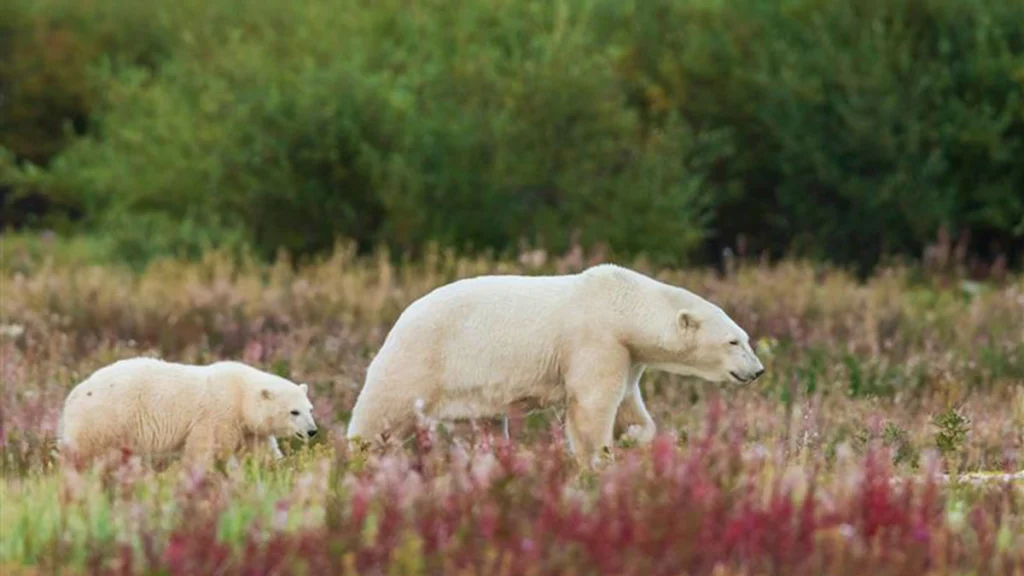
- Home to over 25 at risk species, like wolverines, polar bears, grizzly bears and caribou
- Holds 1.7 billion tonnes of carbon in its soils, wetlands, and peatlands—equivalent to 8 years’ worth of greenhouse gas emissions*.
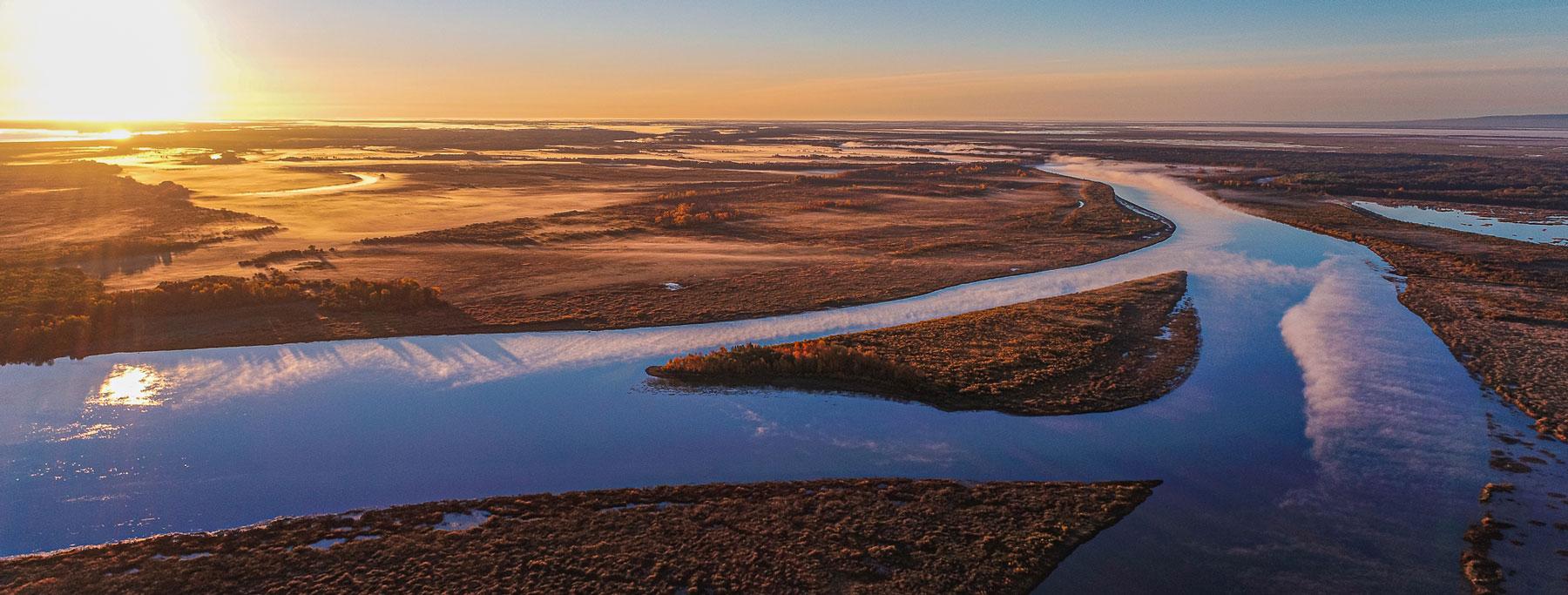
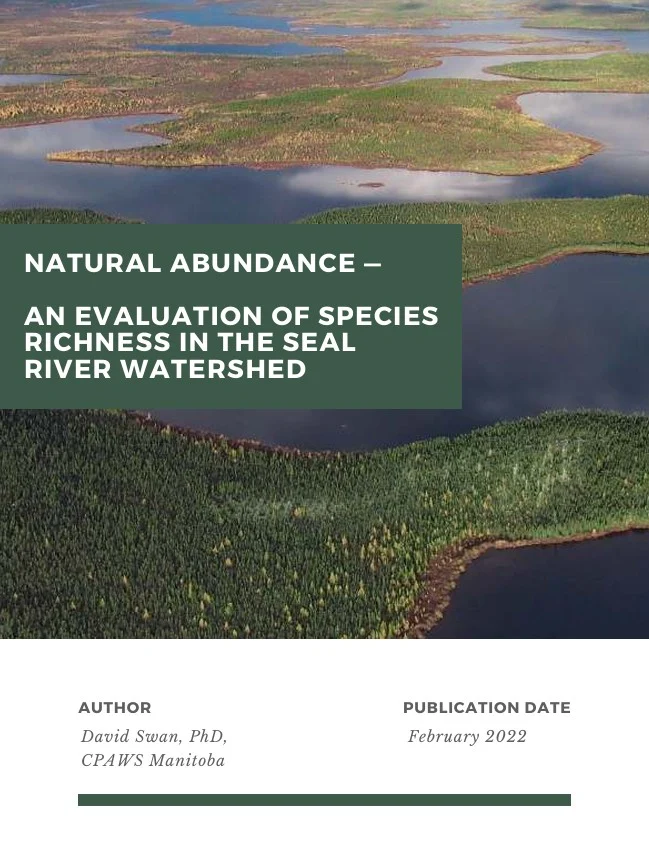
Additionally, funding will go to establish the Seal River Watershed as an Indigenous Protected and Conserved Areas (IPCA) and National Park Reserve. One of the largest intact watersheds in the world, there are few remaining places like it, where ecosystems continue to function at this scale and mostly undisturbed.
The Seal River Watershed has many large wetlands and carbon sinks that help to offset climate change, and it’s home to 261 known species. The Dene and Cree Peoples are deeply rooted in the land as well.
While there is work to be done before this IPCA and National Park Reserve is completed, the recent funding commitment is a huge sign of confidence that efforts are heading in the right direction.
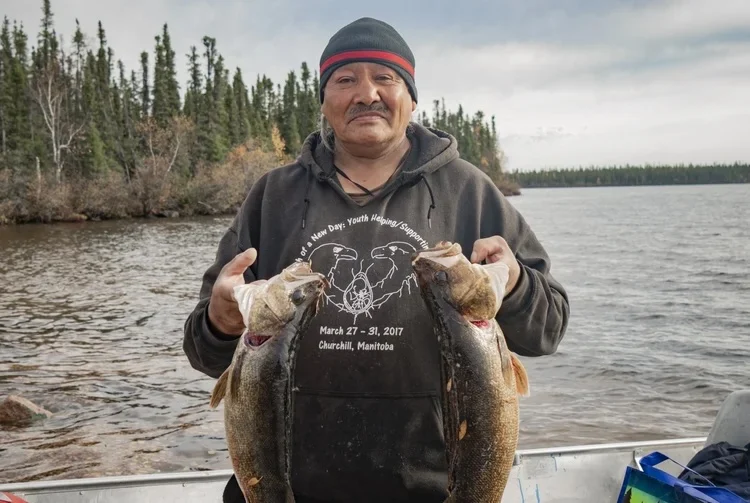
The Seal River Watershed Alliance continues to lead protection efforts, representing the Sayisi Dene First Nation, Northlands Denesuline First Nation, Barren Lands First Nation and O-Pipon-Na-Piwin Cree Nation – working with the Government of Manitoba and Parks Canada, and with support from partners including CPAWS Manitoba.
Get to know the some of the at risk wildlife we’re trying to protect in the area, in this blog by CPAWS MB.
Environmentally responsible development
The mitigation hierarchy has been identified as central to the future of development in Canada, providing a framework to address the impact of projects on nature and wildlife.
Up until now, Canada has lacked this framework and as a result, the destruction of nature is too often considered an unfortunate trade-off for development. If fully implemented, this will be a big step forward.
A clear order of priority
- Avoid impacts.
- Where impacts are unavoidable minimize their severity
- Restore affected areas to their original or a similar state.
- Use offsets or environmental compensation only as a last resort.
Accounting for nature’s value
Nature sustains our livelihoods, local economies, cultures and well-being.
When Prime Minister Carney spoke at the launch of “A Force of Nature”, he referenced the billions of dollars that Parks Canada sites add to Canada’s GDP and the critical contribution of “ecosystem services”—nature’s built-in systems that filter our drinking water, purify the air, buffer our communities from extreme weather like flooding and wildfires, and so much more.
Despite this, according to the way we do accounting in Canada, land that has not been bought or sold has no value. That means when a decision-maker is considering whether to support a mine or other nature-harmful activity, they are often considering the potential economic value of the project against a loss of nature that carries no financial burden.
“A Force of Nature” has committed to establishing a taskforce on Natural Capital Accounting—a way to calculate nature’s value on paper so that it is understood as an economic asset and an environmental asset. It recognizes that healthy land and waters provide real and measurable benefits to communities across the country. It demonstrates that Canada’s leaders are building a smart economic strategy that invests in nature to further the prosperity of our collective way of life.
If we were to pay for the many services nature provides for us, it would cost hundreds of billions of dollars each year.
While a Natural Capital Accounting system is not perfect—nature is, of course, priceless—proper implementation would potentially create significant, positive change.
THE FALLOUT
Funding Came Too Late
As we celebrate the governments renewed commitment to nature, it came at the eleventh hour. The delayed decision has disrupted core projects, stalled momentum and led to job loss for many Canadians.
In March, I travelled to Saskatoon to attend the Braiding Knowledges Gathering – a community of Indigenous and non-Indigenous scientists, conservation practitioners and others who are working to protect nature and culture through the lens of ethical space.
During the few days I spent at the conference, I spoke to several people who told me they had just lost their jobs, or were scheduled to lose them, because there wasn’t enough funding available to sustain their role. This same story was happening across the country as we got closer to March 31st, the deadline for previous nature funding to expire.
Now that new funding has been announced, some of these jobs may return but a lot of damage has already been done, and it could take months for much of the newly announced funding to begin flowing. Meanwhile, there are people without work, wondering how they’ll pay their bills.
While we are grateful for the new funding, this is a situation that could have been easily avoided by announcing “A Force of Nature” sooner.
THE GREY AREA
OECM’s are Doing a Lot of the Heavy Lifting
Examples of OECMs that work
Large military site kept forested for training, which also provides important habitat for wildlife
Or don’t… just ‘check a box’
An old-growth forest logged to the ground, with trees replanted using unsustainable methods.
“A Force of Nature” suggests 8% of Canada will be protected through “expanding partnerships and using innovative tools”, including Other Effective Conservation Measures (OECMs) and by “exploring other opportunities on varied lands”.
OECMs are sites that were not intended for conservation but ultimately meet the same long-term objectives. When used well and in conformance with the defined standards, these can be an important conservation tool. On the other hand, when used poorly, they can inflate conservation targets to report false progress and hide real issues.
We will have to watch carefully to see how OECM’s and other tools are used to meet nature protection goals.
How Impactful will Funding Be?
“A Force of Nature” combines funding for many nature-related programs, making it difficult to compare to previous announcements. While it represents a significant investment overall, there are moderate funding cuts for some key conservation programs. This comes as no surprise, as Canada continues to ride the unpredictable waves of today’s geopolitical and economic reality, but it will take time to assess the full impact.
While my analysis focuses on how the strategy will affect land and freshwater conservation, there remain real concerns around the impact on ocean conservation, which CPAWS will soon be speaking about.
The answers to these questions will become clearer in months and years ahead. We’ll be watching.
THE ROAD TO 2030, AND BEYOND
Overall, “A Force for Nature” appears to be a very positive step forward for land and freshwater conservation in Canada. It has a huge amount of potential, but there is still a lot of work to do. Strong and efficient implementation is crucial to keep us on track to protect 30% of nature by 2030.
Over the coming years, CPAWS will continue our work to hold the government to account, to ensure that the “A Force of Nature” is implemented effectively in a way that benefits all Canadians.
Article written by:

Chris Rider
National Director, Conservation
CPAWS
Other articles you may be interested in:
-
 Conservation, Economy
Rewriting the Value of Nature in Canada
-
 Conservation, Economy
Nature is at the Heart of the Economy
-
 Economy, Government and Policy
Speed Kills: Fast-Tracking Development is Risky Business
-
 Economy, Government and Policy
Nation-Building or Breaking?
-
 Economy, Government and Policy
Statement: CPAWS response to “A Force of Nature: Canada’s Strategy to Protect Nature”
-
 Economy, Government and Policy
CPAWS In the News
-
-
 Economy, Government and Policy
Statement: Federal Audit shows we can protect 30% of nature by 2030, so why is the federal government hitting the brakes?
-
 Economy, Government and Policy
Statement: Nature Benched in Budget 2025
-
 Economy, Government and Policy
Addressing the Natural Infrastructure Policy Gap is Crucial to Nation-Building Success
-
 Economy, Government and Policy
Nature on the federal balance sheet: Time to stop funding the problem
-
 Economy, Government and Policy
Canada’s nature is worth fighting for
-