
Indigenous-led Conservation
Cathedral Grove, MacMillan Provincial Park, Vancouver Island by Ferenc
Indigenous-led conservation, designed and managed by Indigenous communities, benefits both nature and everyone in Canada.
Supporting the use of practices, knowledge, skills, and laws that Indigenous Peoples have developed, refined, and shared across generations to care for nature in a more holistic way.
Definitions
Lands and waters where Indigenous governments have the primary role in protecting and conserving environments through Indigenous laws, governance, and knowledge systems. (Indigenous Circle of Experts)
During the early days of colonization, some First Nation and Inuit communities signed ‘peace and friendship treaties’ to establish new trade relationships and military alliances. Shortly after signing, colonial governments often neglected the spirit and terms of these treaties, seizing land for successive waves of colonizers and expelling many Indigenous peoples from their lands—lands they never agreed to relinquish—or confining them to small “reserves.” In recent decades, modern treaties, strongly supported by courts, grant significant rights to the signatory First nations, frequently including self-governance agreements that empower Indigenous communities to make their own decisions. Learn More.
In parts of Canada where no treaties were ever signed, European settlement was undertaken with no consent from the original inhabitants. This is what we refer to as “unceded” land.
Regardless of whether historic treaties were signed, where no consent was given for land to be taken, it is considered “unsurrendered”.
In conservation, allyship means actively supporting Indigenous-led initiatives by using one’s position and resources to challenge barriers and promote equitable partnerships. It’s a continuous practice of learning and stepping back so Indigenous voices can lead the way.
Reconciliation is about establishing and maintaining a mutually respectful relationship between Aboriginal and non-Aboriginal peoples in this country. In order for that to happen, there has to be awareness of the past, an acknowledgement of the harm that has been inflicted, atonement for the causes, and action to change behaviour.
Indigenous Knowledge refers to a set of complex knowledge systems that are unique to First Nation, Métis and Inuit communities based on their worldviews. It is a holistic view of the world, connectedness among living things, and balance or reciprocity with nature.
Traditionally, conservation organizations such as CPAWS have worked entirely within Western knowledge systems, which include Western science. Integrating IKS into our work helps us to make better decisions and to be better partners to Indigenous nations. Learn more.
Indigenous-led conservation is the foundation for many of the most effectively protected areas in Canada.
As traditional stewards of land and water with knowledge gleaned over centuries, Indigenous leaders provide immense value to conservation. Their leadership has been the foundation for many of the most effective protected areas in Canada and is critical to protecting nature for future generations.
Indigenous-led conservation centres the traditional stewards who have a key role in decision-making and prevents the repetition of past harmful conservation efforts that removed Indigenous Peoples from their land.
Indigenous Protected and Conserved Areas (IPCA) are lands and waters where Indigenous governments have the primary role in protecting and conserving ecosystems through Indigenous laws, governance, and knowledge systems.
They weave together cultural protection, language preservation, and environmental stewardship—recognizing that you cannot protect land without protecting culture.
IPCAs represent a transformative and holistic approach to conservation that benefits both nature and people.
While they vary in terms of their governance and management objectives, IPCAs generally share three essential elements:
- They are Indigenous-led
- They represent a long-term commitment to conservation
- They elevate Indigenous rights and responsibilities
‘Indigenous-led conservation’ is a new way of describing a range of stewardship practices, knowledge, skills, and laws Indigenous Peoples have developed, refined, and shared across generations to care for and govern their territories.
Supporting Indigenous-led conservation is an important part of reconciliation.
Balancing the Narrative: Communications Guidelines for Indigenous-led Conservation by The Conservation through Reconciliation Partnership (CRP)
For more than a century after Canada’s first National Park was created in 1885, Indigenous peoples were explicitly excluded from processes to establish parks and protected areas across Canada.
In many cases, they were forced away from the lands and water that they had stewarded and that had sustained them for millennia. This is part of the history of parks in Canada, and it is important to acknowledge it, as we strive to do better.
For an organization like CPAWS, doing better involves working to ensure that we are following the leadership of Indigenous Peoples wherever possible, and that we are always acting in a way that fosters partnership and supports reconciliation.
When Indigenous leadership is centred, we can break down barriers and create solutions together, using:
- Shared Expertise – combining legal knowledge, technical skills, and communication networks for greater impact.
- Stronger Voices – united advocacy carries more weight than scattered efforts. Decision-makers listen when diverse voices speak together.
- Innovative Approaches – together, Traditional Indigenous Knowledges and Western science create better environmental outcomes. Incorporating different ways of knowing ensures that all aspects of conservation are considered and addressed.
Conservation today faces more challenges than ever — funding gaps, policy pressures, and capacity constraints. When governments prioritize development over protection, the places we love become vulnerable. By following the lead of Indigenous Peoples, we can address these challenges together, while working to undo the harms of the past.
The Displacement of Indigenous Peoples for National Parks (2024). EnvironBuzz Magazine.
The shady past of Parks Canada: Forced out, Indigenous people are forging a comeback (2017). National Post.
Across Canada, Indigenous-led conservation efforts are transforming landscapes:
- Traditional fire management: Indigenous-led burning practices can prevent the catastrophic wildfires that threaten our communities, damage habitats, and fill our skies with smoke. Learn More
- Indigenous Guardian programs: provides the resources for Indigenous People to be the “eyes and ears” on their traditional territories, monitoring ecological health, maintaining cultural sites, and protecting sensitive areas and species. These actions not only create jobs and opportunities to exercise stewardship responsibilities but also result in healthier communities and ecosystems for everyone. Learn More
- Cultural revitalization: by including Indigenous-led conservation in Canada’s approach to protecting nature, IPCAs are spaces where language, knowledge, cultural and spiritual connections to the land can be maintained, developed and passed on. The self-determination stemming from Indigenous authority and governance of IPCAs is critical to the well-being of current and future generations. Learn More.
Learn more about reconciliation and Indigenous-led conservation
As a national conservation charity, CPAWS believes it is our organization’s responsibility to educate our staff about the history and current lived experiences of Indigenous Peoples in Canada in an effort to strengthen relationships with Indigenous partners and the communities who are involved in conservation work.
We strongly encourage our supporters to join us in our learning about the history of Indigenous Peoples.
If you are looking for resources to learn more about Indigenous-led conservation and Indigenous History, here are a few we recommend you check out:
-
 Resource centre
IPCA Knowledge Basket
A resource centre for Indigenous Protected and Conserved Areas.
-
-
 Podcast
Land(ing) Back podcast
A powerful podcast series featuring inspiring conversations with Indigenous youth climate activists.
-
 Online course
Indigenous Canada
A free course about Indigenous history by the University of Alberta.
-
 Resource centre
National Centre for Truth and Reconciliation
A website to learn more about the Truth and Reconciliation Commission’s report and subsequent calls to action for Canada.
-
 Online book
Indigenous Peoples Atlas of Canada
An online book on Truth and Reconciliation, First Nations, Inuit, and Metis by Canadian Geographic.
-
 Resource centre
Conservation Through Reconciliation Partnership
A resource supporting Indigenous governments, organizations, and communities working on conservation.
-
 Resource centre
Indigenous Leadership Initiative
A resource for strengthening Indigenous Nationhood as a path to fulfilling the responsibility to care for lands and waters.
-
 Resource centre
Braiding Knowledges Canada
Delivering and mobilizing knowledge arising from locally-relevant research, to further reconciliation and Indigenous-led conservation.
-
 Resource centre
Canada Conservation: A pan-Canadian Pathway Initiative
A resource for halting and reversing biodiversity loss through Western science and Indigenous knowledge.


CPAWS’ history and ongoing commitments to First Nations, Métis and Inuit peoples
When our organization was founded, conservation was undertaken in very different ways, and in a model that inherently excluded the First Nations, Métis and Inuit who had stewarded these lands and waters for millennia. They were not consulted in the decision-making processes, and in many cases, their lands and livelihoods were taken from them as part of colonial conservation initiatives. This is the shameful history of our sector, but it’s one that we need to acknowledge if we want to do better now and into the future.
CPAWS, as an organization, is committed to learning from our past. And while we now work very differently, we are continuously learning how to improve as allies; this means recognizing the leadership of First Nations, Métis and Inuit peoples and using our resources to support their conservation goals, remove barriers and amplify their voices.
Reconciliation Principles
Committed to Reconciliation, Guiding Principles
CPAWS works across Canada, including on unceded, unsurrendered, and treaty lands of First Nations, Métis, and Inuit. As a conservation organization, we are on an ongoing reconciliation journey and have adopted Guiding Principles for Supporting Leadership and Reconciliation.
Complemented by nationally and regionally appropriate actions, our commitment to these principles helps advance our reconciliation efforts as we advocate for effective, long-term protection of ecologically and culturally significant land, freshwater, and ocean areas of Canada. We are prepared to be held accountable to this commitment and acknowledge that we will not be alone in deciding whether our actions are effective.
Advancing truth and reconciliation requires that we take steps towards healing between Indigenous and non-Indigenous peoples by forming new partnerships and relationships based on respect, reciprocity, equality, and trust. This includes advancing our biodiversity conservation priorities in an open and honest way while respecting the rights and self-determination of Indigenous communities and organizations in pursuing their own economic and cultural interests.
Our Guiding Principles were developed by our National Board of Trustees, in consultation with national and regional staff. They will be updated through a similar process as needed.
Allyship and conservation
Allyship and conservation
The role of CPAWS as an ally in this space is to support Indigenous communities in their conservation efforts, building on a foundation of shared goals and mutual respect. We believe this will also bring about more resilient, effective, and enduring conservation successes.
Allyship is about how we support Indigenous-led conservation efforts by utilizing our resources to remove barriers and promote equitable partnerships. It is not a destination, but an ongoing journey of relationship building and organizational transformation, characterized by continuous learning and stepping back to allow Indigenous voices to lead the way.
We are committed to working within a framework of reconciliation, advancing our biodiversity conservation priorities in an open and honest manner while respecting the rights and self-determination of Indigenous communities and organizations as they pursue their own economic and cultural interests.
Learn more about the national Indigenous organizations
The Displacement of Indigenous Peoples for National Parks (2024). EnvironBuzz Magazine.
The shady past of Parks Canada: Forced out, Indigenous people are forging a comeback (2017). National Post.
Latest news and updates from CPAWS about Indigenous-led conservation
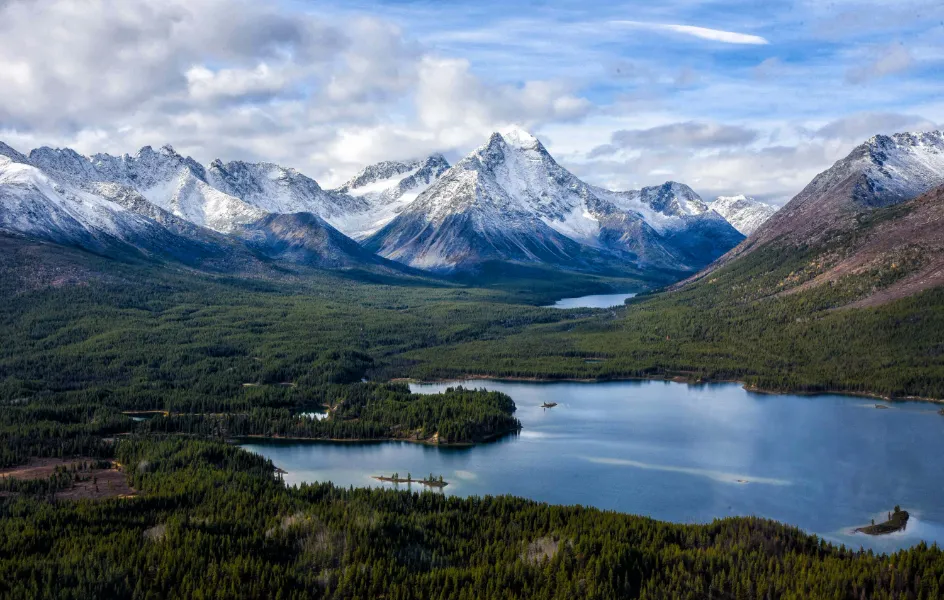
3 million hectares. Zero roads. One chance to protect it forever.

CPAWS-BC celebrates the milestone announcement of the Mia-yaltwa Ha’lidzogm hoon

CPAWS-BC stands with Coastal First Nations

Stronger Together: Supporting Indigenous-Led Conservation

Still Fighting for a Seat at the Table

📢THE GRADES ARE IN. LET’S LOOK AT WHO’S LEADING CONSERVATION IN CANADA
