Skate to Where the Puck Is Going

Government and Policy
Anyone who knows me is well-aware of how passionate I am about two things: marketing and hockey. After more than 20 years in cause marketing and nearly as many as a hockey goalie mom, I have learned that success in both arenas comes down to thinking ahead and teamwork.
At a time when headlines and political narratives use polling to pit nature and the economy as rival teams, as if Canadians should pick a side, I’m reminded of a saying in hockey: “Don’t skate to where the puck is or has been, skate to where it is going.”
The best players, and the best marketers, don’t chase the puck—they anticipate where it’s going. So, while polls tell us what’s trending, research tells us what’s lasting. Studies consistently show that Canadians want economic growth alongside a healthy environment.
Across the country, Canadians are increasingly faced with wildfires, heatwaves, polluted air and unsafe drinking water. Livelihoods like farming or fisheries are struggling to sustain local economies. However, when our ocean, land and freshwaters are healthy, so is our economy. Canadians get it, why don’t our leaders?
The better play is to look beyond the ‘black and white’ of polling to understand the grey area where people’s hopes, worries, and needs overlap. It’s where we relate to each other the most and connect through shared values that set our long-term priorities and define who we are, as Canadians.
The most effective marketing campaigns don’t just push a message in reaction to snapshot opinions, they understand the enduring values that bring us together and speak to what we care about fundamentally.
Why Polls Fall Short
Marketers are listeners at heart. We sift through data, stories, and conversations, searching for the insights that reveal what matters most to people. Polls are helpful indicators that capture opinions in the moment, but like a puck at play the results can be positioned differently depending on who’s stickhandling the narrative; relying on them alone is not a sound strategy. It’s in the larger body of research where the magic happens.
Take the recent polling on environmental protection and economic development. The headlines are full of numbers, some encouraging and some not so much, but the real story about how Canadians feel is more complex.
The recent federal-provincial MOU on energy development is the latest example. In a rush to frame the debate as development versus environment, polls are being leveraged to force listeners to pick sides; either celebrate it as a win for economic growth or present it as concerning for nature.
Beyond polls: market research reveals nature is part of our identity
Snapshot polls show Canadians are conflicted between concern around the economy and the environment. If we want to create real, lasting change, we need to look deeper than what individual polls reveal. Market research helps us understand where the puck is going, what Canadians truly believe and aspire to.
Recent research by CPAWS, based on conversations with over 25,000 Canadians, allowed us to hear what people are saying across the board. Rather than focusing on a single issue, we listened to what they care about and their concerns about the future, as well as what shapes their personal values.
When analyzing research and polls within a larger context, it’s clear that Canadians still care deeply about nature. It’s not a luxury or a “nice to have,” it’s essential to their wellbeing, prosperity, and sense of identity. They understand that a healthy environment drives economic strength, by supporting their local businesses, like tourism, fisheries, forestry, agriculture, and clean-tech investment. They see how nature’s infrastructure, like wetlands, buffer their communities from extreme weather such as floods or wildfires, reducing the costly impact of disaster-recovery.
Canadians want leaders to protect at least 60% of our ocean, land and freshwater. Most feel their province isn’t doing enough, and many believe the health of nature in their region is worse than it was a decade ago.
Most importantly, Canadians reject the idea that they must choose between nature and development. They want a balanced approach; smart development that preserves what’s special about this country.
Ultimately, they want leaders with the foresight to make sound decisions that grow the economy and sustain the environment. That’s progress.
Leveraging Shared Values to Inform Policy and Unite Canadians
If you’ve ever been in an arena during a close hockey game, you know what unity feels like. Nature has an even greater power to bring us together. Market research shows that, while hockey is beloved, it’s nature and healthcare that are closest to the heart of our national identity. Whether you’re from downtown Toronto or a small town in the Yukon, we all value our mental and physical wellbeing, which depends on clean air and water, healthy forests, and the chance to spot a moose (or at least pretend we did). These are mainstream values from coast to coast to coast.
As a goalie mom, I know the anxiety of sudden death overtime. That’s how it feels watching the debate over nature protection. Just like in hockey, the best outcomes happen when we work as a team, not when we’re divided by false choices.
As marketers, advocates, and citizens, our job is to amplify these shared values, tell stories that inspire action, and keep searching for common ground. Protecting nature is about honouring who we are and who we want to become, not just preserving pristine landscapes. Our path forward should be guided by the shared values that unite us.
So let’s tell Canada’s leaders to stop chasing the puck, supporting their views with individual polls. It keeps them behind the play and limits foresight. When it comes to nature, we all want our country positioned to score. Will Canada’s leadership give us something to cheer about in 2026?
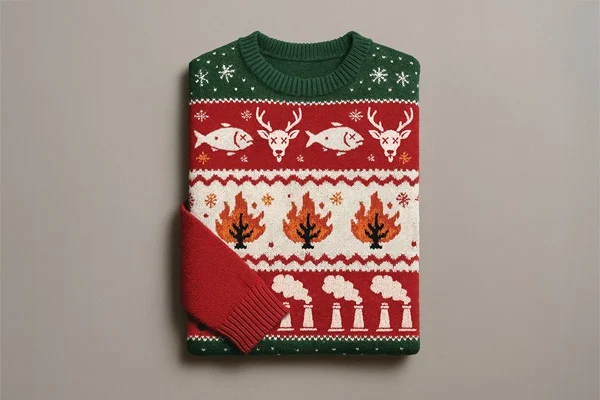
Now That’s Ugly
Canada’s environmental record in 2025 is worse than an Xmas sweater.
Other articles you may be interested in:
-
 Government and Policy
Nature, Canada’s most overlooked mental health resource?
-
 Government and Policy, Wildlife
Endangered by Predatory Policy, Who Pays the Price?
-
 Government and Policy, Wildlife
Weakening Environmental Safeguards for a Pipeline Puts Orcas at Risk
-
 Government and Policy
Making Nature Decision-Relevant for Government and Business: A Roadmap for Canada
-
-
 Economy, Government and Policy
Speed Kills: Fast-Tracking Development is Risky Business
-
 Economy, Government and Policy
Nation-Building or Breaking?
-
 Economy, Government and Policy
A Force Of Nature?
-
 Government and Policy
How to Spot Misinformation
-
 Economy, Government and Policy
Statement: CPAWS response to “A Force of Nature: Canada’s Strategy to Protect Nature”
-
 Economy, Government and Policy
CPAWS In the News
-
 Government and Policy
Open Letter to Prime Minister Carney
-
 Biodiversity, Conservation, Government and Policy
The Clock is Ticking Yet the Work is Not Done
-
 Coasts and Ocean, Government and Policy
Defend Our Pacific North Coast
-
 Coasts and Ocean, Government and Policy, Indigenous-led Conservation
CPAWS-BC stands with Coastal First Nations
-
 Economy, Government and Policy
Statement: Federal Audit shows we can protect 30% of nature by 2030, so why is the federal government hitting the brakes?
-
 Economy, Government and Policy
Statement: Nature Benched in Budget 2025
-
 Economy, Government and Policy
Addressing the Natural Infrastructure Policy Gap is Crucial to Nation-Building Success
-
 Government and Policy
Statement: CPAWS reacts to federal government’s first Nation Building Projects
-
 Coasts and Ocean, Government and Policy, Indigenous-led Conservation
Still Fighting for a Seat at the Table
-
 Government and Policy
“Canada Strong” Means Standing Up for Nature
-
 Economy, Government and Policy
Nature on the federal balance sheet: Time to stop funding the problem
-
 Government and Policy
Nation-Building Isn’t Just About Speed. It’s About Vision.
-
 Economy, Government and Policy
Canada’s nature is worth fighting for
-
 Coasts and Ocean, Government and Policy
What Changes in Politics Mean for Nature and Conservation
-
 Government and Policy, Indigenous-led Conservation
COP 16: MAKING PEACE WITH NATURE
-
 Conservation, Government and Policy
Environmental groups welcome the launch of Canada’s strategy to save nature
-
Biodiversity, Government and Policy
17 environmental groups present plan for nature ahead of World Biodiversity Summit
-
-
 Government and Policy, Parks and Protected Areas
Canadians expect more than a C average in conservation
-
Biodiversity, Government and Policy
CPAWS welcomes historic new global agreement to save nature