How to Spot Misinformation

Government and Policy
Originally published on March 5, 2026
A practical guide to finding the truth about nature, climate, and conservation
We live in a time when information travels faster than ever. That can be powerful. It helps us learn, connect, and take action. But it also means misinformation (false or misleading information) can spread just as quickly.
When it comes to climate change, conservation, and efforts like protecting 30% of lands and waters by 2030 (30×30), misinformation can create confusion, erode trust, and slow progress on solutions that benefit everyone.
The good news? You don’t need to be an expert to spot misinformation. With a few simple tools, anyone can learn to separate fact from fiction.
We’ve put together a practical guide to help you differentiate between fact and fiction.
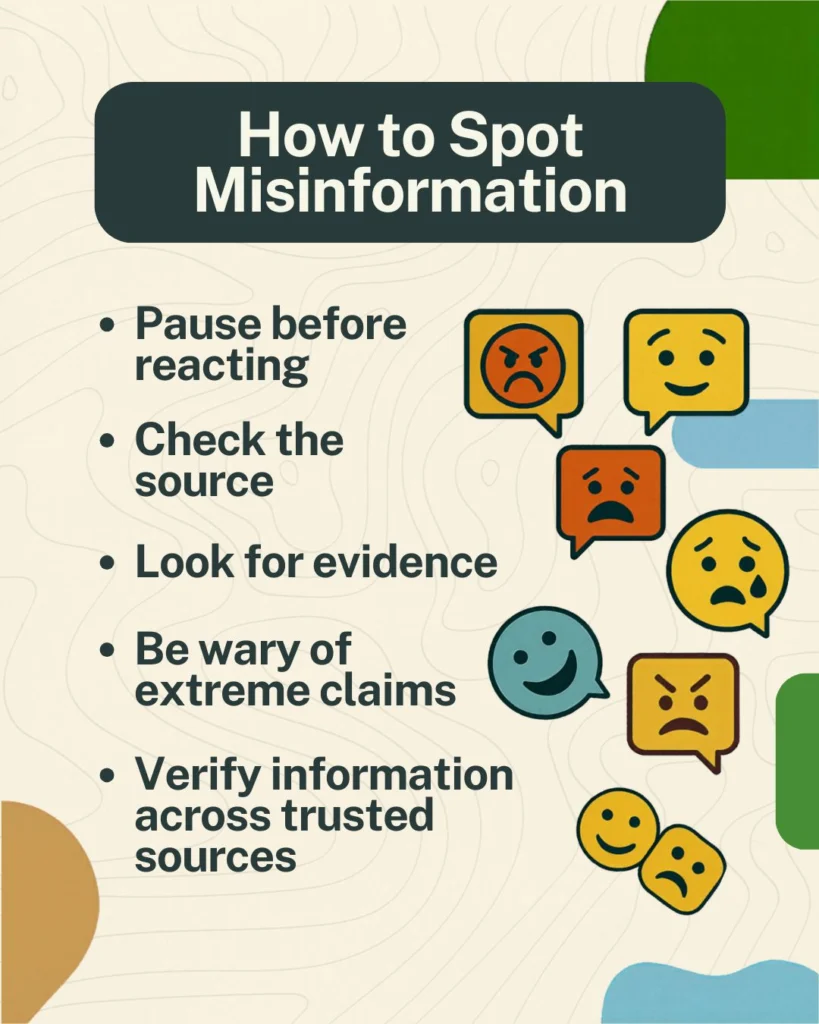
Misinformation often tries to trigger a strong emotional response like anger, fear, or outrage, because emotional content spreads faster.
If a post makes you feel immediately angry or alarmed, pause and ask yourself:
- Who is sharing this?
- What are they trying to make me feel?
- Are they encouraging me to react quickly?
Reliable information invites understanding. Misinformation often pressures you to react without thinking.
Tip: The more emotional the claim, the more important it is to verify it.
One of the easiest ways to assess credibility is to look at where the information comes from.
Ask yourself:
Is this from a recognized scientific institution, university, government agency, or established organization?
Or is it from an anonymous account, meme page, or unfamiliar website?
Does the source have expertise in the topic?
For example, climate science is studied by thousands of scientists around the world. Claims that contradict decades of scientific research should be supported by strong, credible evidence, not just opinions or isolated anecdotes.
Tip: Trust sources that are transparent about who they are and how they know what they’re saying. Does their Instagram bio link to their website or a specific research paper?
Misinformation often presents complex issues as simple, absolute statements.
Examples include claims like:
- “Climate change isn’t real.”
- “Protecting land means no one can ever use it again.”
- “Conservation destroys local economies.”
In reality, conservation and climate solutions are nuanced. For example, many protected areas support tourism, recreation, and sustainable local economies while safeguarding ecosystems.
Be cautious of language like:
- “Always”
- “Never”
- “Proven false”
- “They don’t want you to know”
These phrases are often used to create certainty where uncertainty or complexity exists.
Tip: Real science acknowledges complexity. Misinformation often ignores it.
Credible claims are backed by evidence, not just personal beliefs.
Ask:
- Does the claim link to research, data, or reputable reports?
- Or is it based on personal opinion or speculation?
For example, the goal of protecting 30% of lands and waters by 2030 isn’t arbitrary. It’s based on decades of scientific research showing that protecting enough nature is essential to maintain biodiversity, stabilize the climate, and ensure healthy ecosystems.
Protecting nature helps safeguard clean water, supports wildlife, reduces climate risks, and maintains the natural systems we all depend on.
Tip: Strong claims require strong evidence.
If something is true, you’ll usually see it reported by multiple credible sources.
Search for the same claim and see if it appears on:
- Government websites
- Scientific organizations
- Universities
- Established news outlets
If a dramatic claim only appears on one blog, social media account, or YouTube channel, it may not be reliable.
Tip: Truth is usually supported broadly. Misinformation often stands alone.
Not all misinformation is accidental. Sometimes it spreads because it benefits certain interests, creates division, or delays action.
Throughout history, misinformation has been used to create doubt about scientific issues from tobacco risks to climate change.
When people are confused, it becomes harder to move forward with solutions.
That’s why learning to recognize misinformation is so important.
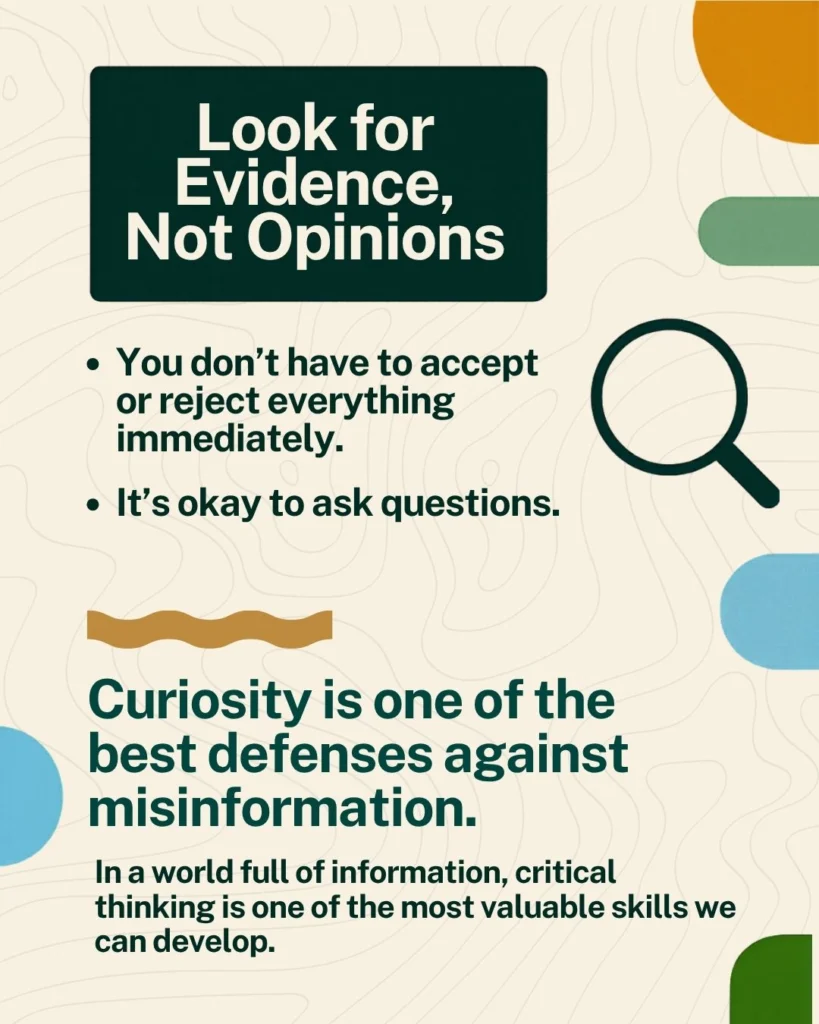
You don’t have to accept or reject everything immediately. It’s okay to ask questions.
Good questions include:
- Where did this information come from?
- What evidence supports it?
- Do credible experts agree?
- Does it make sense based on what we already know?
Curiosity is one of the best defences against misinformation.
Why This Matters
Protecting nature is not about politics or ideology. It’s about ensuring a healthy future—for clean air, safe water, stable climates, and thriving communities.
Conserving and restoring nature is vital to help combat climate change; protect biodiversity and species at risk; and maintain a strong, sustainable economy. We all depend on nature in ways both visible and invisible.
When misinformation spreads, it can delay important decisions and create unnecessary division.
But when people have the tools to find reliable information, they can make informed choices and participate meaningfully in conversations about our shared future.
The Bottom Line: You Have the Power to Find the Truth
You don’t need specialized training to spot misinformation. You just need to:
- Pause before reacting
- Check the source
- Look for evidence
- Be wary of extreme claims
- Verify information across trusted sources
- Stay curious
In a world full of information, critical thinking is one of the most valuable skills we can develop.
Because protecting nature—and protecting truth—starts with informed people.
Other articles you may be interested in:
-
 Government and Policy
Nature, Canada’s most overlooked mental health resource?
-
 Government and Policy, Wildlife
Endangered by Predatory Policy, Who Pays the Price?
-
 Government and Policy, Wildlife
Weakening Environmental Safeguards for a Pipeline Puts Orcas at Risk
-
 Government and Policy
Making Nature Decision-Relevant for Government and Business: A Roadmap for Canada
-
-
 Economy, Government and Policy
Speed Kills: Fast-Tracking Development is Risky Business
-
 Economy, Government and Policy
Nation-Building or Breaking?
-
 Economy, Government and Policy
A Force Of Nature?
-
 Economy, Government and Policy
Statement: CPAWS response to “A Force of Nature: Canada’s Strategy to Protect Nature”
-
 Economy, Government and Policy
CPAWS In the News
-
 Government and Policy
Open Letter to Prime Minister Carney
-
 Biodiversity, Conservation, Government and Policy
The Clock is Ticking Yet the Work is Not Done
-
 Government and Policy
Skate to Where the Puck Is Going
-
 Coasts and Ocean, Government and Policy
Defend Our Pacific North Coast
-
 Coasts and Ocean, Government and Policy, Indigenous-led Conservation
CPAWS-BC stands with Coastal First Nations
-
 Economy, Government and Policy
Statement: Federal Audit shows we can protect 30% of nature by 2030, so why is the federal government hitting the brakes?
-
 Economy, Government and Policy
Statement: Nature Benched in Budget 2025
-
 Economy, Government and Policy
Addressing the Natural Infrastructure Policy Gap is Crucial to Nation-Building Success
-
 Government and Policy
Statement: CPAWS reacts to federal government’s first Nation Building Projects
-
 Coasts and Ocean, Government and Policy, Indigenous-led Conservation
Still Fighting for a Seat at the Table
-
 Government and Policy
“Canada Strong” Means Standing Up for Nature
-
 Economy, Government and Policy
Nature on the federal balance sheet: Time to stop funding the problem
-
 Government and Policy
Nation-Building Isn’t Just About Speed. It’s About Vision.
-
 Economy, Government and Policy
Canada’s nature is worth fighting for
-
 Coasts and Ocean, Government and Policy
What Changes in Politics Mean for Nature and Conservation
-
 Government and Policy, Indigenous-led Conservation
COP 16: MAKING PEACE WITH NATURE
-
 Conservation, Government and Policy
Environmental groups welcome the launch of Canada’s strategy to save nature
-
Biodiversity, Government and Policy
17 environmental groups present plan for nature ahead of World Biodiversity Summit
-
-
 Government and Policy, Parks and Protected Areas
Canadians expect more than a C average in conservation
-
Biodiversity, Government and Policy
CPAWS welcomes historic new global agreement to save nature